

From a brief spring afternoon at Washington D.C.’s National Portrait Gallery, the story that follows speaks to the broad brushstrokes of how the country was formed, up the civil war. Congratulations on the 250th anniversary of a democracy—and America’s origin story. It was not an easy or straight line arriving to this point.

Why did they come?
European explorers traveled across the Atlantic Ocean to North America attracted by the promise of gold, silver, and other valuable commodities. Beginning in the sixteenth century, short-term voyages gradually evolved into more sustained attempts at colonization. As Spanish, French, Dutch, and English settlers competed with one another for territory long occupied by Indigenous communities, disputes arose, often erupting into armed battle.
Missionaries and colonists from France and Spain came seeking converts, with Protestants from England interested in the same in the Northeast. Wealth and power became concentrated in elites who owned large plantations. Fortunes were made through investment in the profitable “triangle trade,” in which raw materials from the colonies (such as sugar, rice, and lumber) were exchanged for manufactured goods from Europe and New England (such as rum, guns, and cloth). Objections to the slavery were rarely made until the mid-eighteenth century.
It begins
In the 1760s, increased taxation and government interference fueled resentment in Britain’s American colonies. Hostilities smoldered for a decade before erupting into armed conflict in 1775. Many colonists wished to avoid war, but representatives of the thirteen British colonies who formed the Second Continental Congress ultimately decided that it was inevitable. On July 4, 1776, they declared independence from Britain while also attacking the time-honored system of privilege conferred at birth on an elite class. Their assertion that all men are born equal and endowed with inalienable rights has served ever since as an inspiration and a challenge to countries around the world, including the United States.
Indigenous nations were not part of the 1783 peace negotiations.
“We hold these truths to be self-evident, that all men are created equal...”
From the Declaration of Independence
This foundational statement argues that unalienable rights—life, liberty, and the pursuit of happiness—are innate, not granted by government.
Creating Culture
After gaining independence, the United States began the work of developing an independent culture. Writers, artists, performers, and intellectuals emulated the traditions they had inherited from the Old World. Nationalism sparked a challenge of deriving original subject matter from the history, land, and inhabitants of the United States.
Thought leaders, and leaders otherwise, drew inspiration from the natural scenery of North America and the vast continent’s dramatic differences in topography, climate, and wildlife. The landscape was romanticized as an untamed wilderness, which ignored thousands of years of cultivation by Indigenous communities. Regional differences in the manners, customs, and language of the Northeast, South, and West infused many of these works, as did democratic values, such as individualism, optimism, and vitality. These creative and intellectual achievements helped to define the emerging features of the United States.
Onset of industry and commerce, and unrest
In the decades after 1820, the United States experienced a period of rapid change. This was the era of canals and steamboats, the beginning of the railroads, and the acceleration of commerce and industry. Enthusiasm for improvement led to investment in education and religiosity.
The ideals of democracy and egalitarianism became a leveling force. In 1828, Andrew Jackson ran for president as a political outsider from the West. He had served as a first member of the U.S. House of Representatives from Tennessee. He sought to wrest power from Northern elites.
In 1830, legislation approved caused Indian tribes west of the Mississippi River on a grueling “Trail of Tears.” The southern lands they left behind became vast plantations supplying cotton to textile mills in the North. Marginalized groups such free Black men and women sought change through religious and secular organizations increasingly by 1860.


Territorial Identity
For much of the nineteenth century, the United States pursued the goal of exploring, settling, and governing the vast country that lay to the west of the original coastal states. Many commentators believed that the United States was preordained to expand westward to the sea and become a continental nation.
Faith in this “manifest destiny” (a phrase coined in 1845) prompted aggressive expansionist policies that often led to violence. Through a bloody war with Mexico over Texan independence (1846–48), the United States gained immense tracts of land stretching to the Pacific Ocean. These developments came with consequences. The disputed status of slavery in the newly acquired territories brought the nation to the brink of civil war. Legislative compromise postponed the crisis—but only temporarily.
Debates about the shortcomings of the United States as a just society gained momentum during the mid-nineteenth century. Some campaigned for or against the key political and social issues of the day, including temperance reform, abolition, and women’s rights. These reform movements coalesced around the institution of slavery and states’ rights. Opinion in the industrialized North increasingly diverged from Southern leaders. By the mid-1850s, the opposing camps had become too inflamed for agreement, and episodes of armed conflict ensued.
This brings us to the Civil War of 1861-1865, which President Abraham Lincoln steered the country through, only to be assassinated shortly after being elected a second term.
Special offer for the 250th…until July 11, 2026
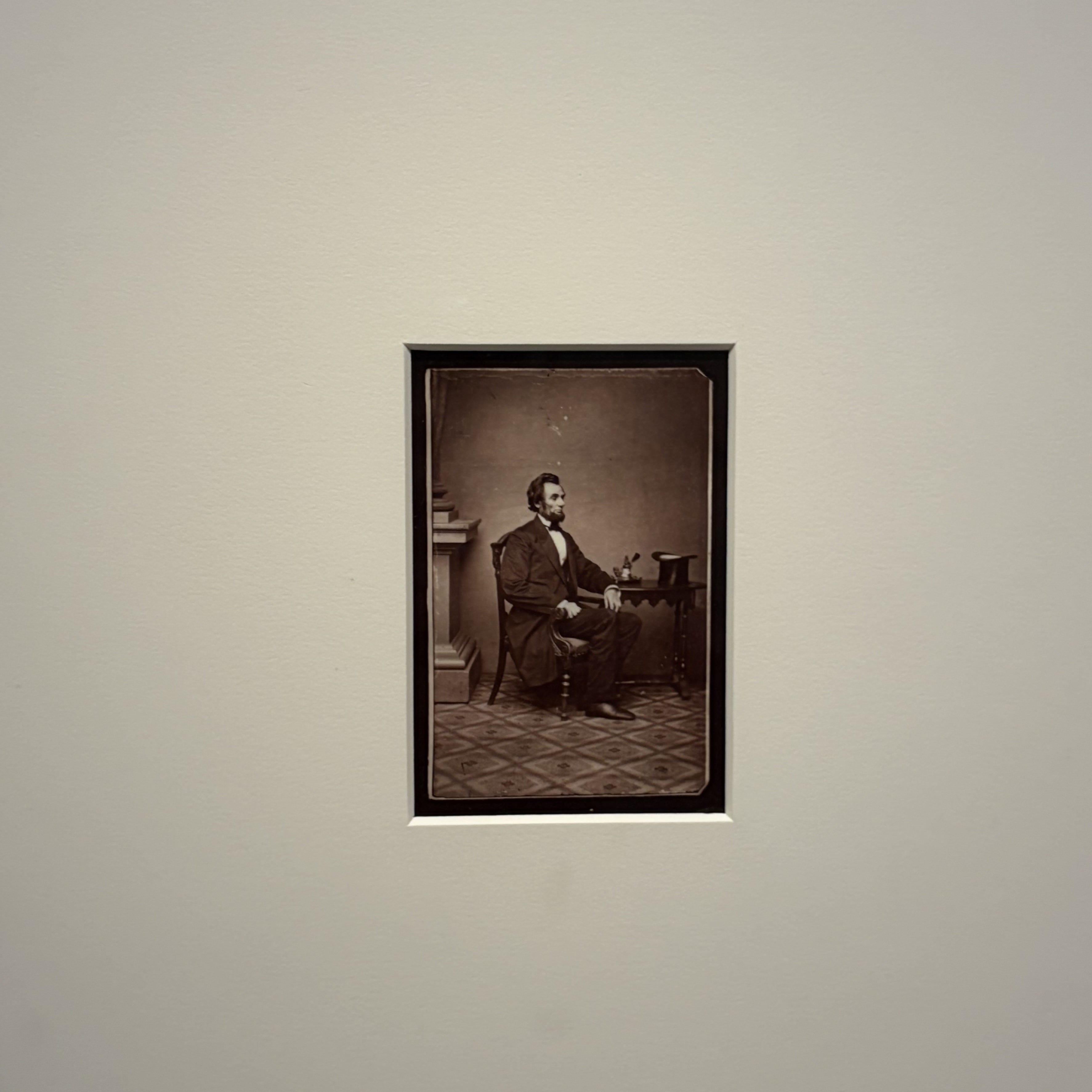
The Frontier of Texas Begins
For my part, this broader part of the storytelling is finished, and I will set the general stage about Texas, where my family lines converged in the beginnings of Texas. The remaining curated narrative is from the National Portrait Gallery, and it has a purpose.
American revolutionaries of Virginia came to Texas from Tennessee in 1821 and 1829, respectively. Sam Houston (Rockbridge County, VA, 1793-1863) was Texas’ first president as the Republic of Texas. He played an outsized role in early Texas history, fighting in the 1835 Texas war. The Republic was annexed to the U.S. in 1845.
Other Texas notable, Stephen F. Austin of Wythe County, VA (1793-1836) was part of the first settlement to Texas from his father’s land grant. He kept Texas under Mexico’s rule, but joined the Texas war for independence in 1836. He is considered the founder of Texas. Also, renowned explorer Davy Crockett, a Tennessee congressman (1827-31, and 1833-35) joined settlers who were promised land in exchange for fighting for Texas independence. He died at the Alamo in San Antonio, Texas in 1836.
