

In 2024, the idea of the long runway for new energy demand was captured in a publication with DCEO for its annual energy edition. The disruption in the oil patch morphed and merged into the energy demand that was coming, largely for data centers, but that’s not all. To understand demand, I turned to chief executive Andy Power of Digital Realty, at the time, the face of the data center industry. Then came the hyperscalers, neoclouds and others taking the stage. This digital infrastructure buildout wave is large and seemingly persistent.
The Next Wave
The NextEra-Dominion merger is a structural statement: two of the largest U.S. utilities consolidating with a combined enterprise value approaching $400 billion. The $67 billion all-stock transaction reflects something broader than deal-making, though it is a big deal. The logic of infrastructure scale, long familiar in technology, is being replayed in energy.
Portfolio: The Long Runway for New Energy Demand

“Disruption is happening in oil and gas in unimaginable ways. Next-gen Texas wildcatters are overthrowing new models, crossing lanes, and unlocking the mysteries of geology.” But that’s not all…
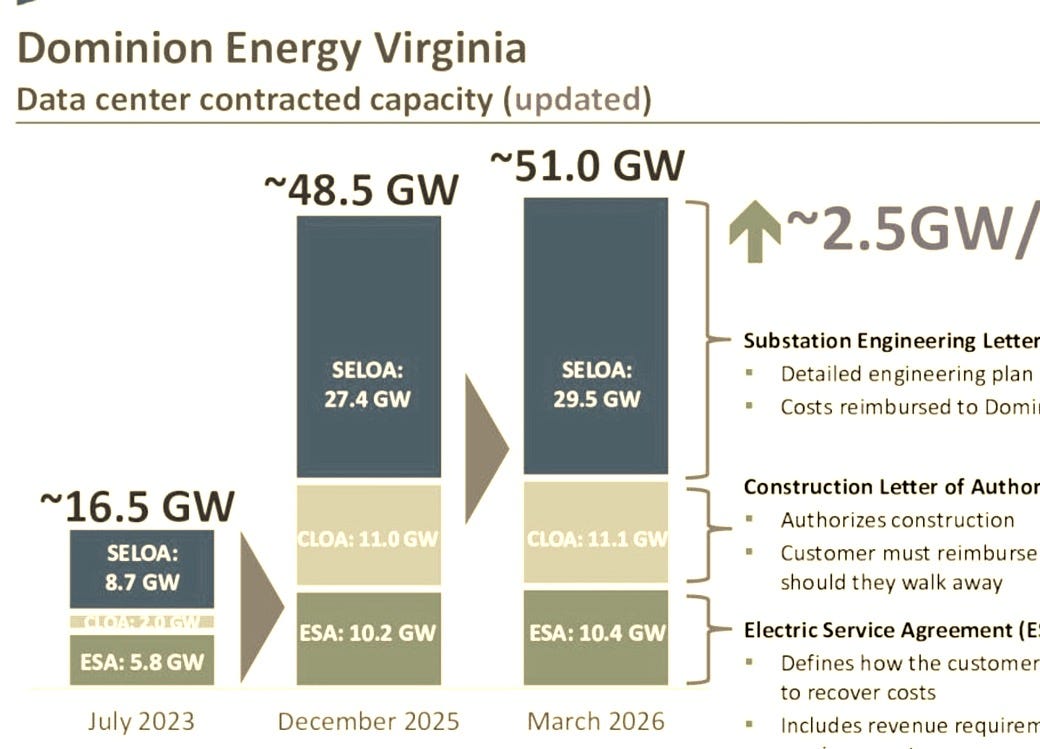
Northern Virginia remains the premier data center market in the country, for now, and Dominion’s foothold there is substantial. In its May 1 earnings presentation, Dominion reported 51 GW of contracted data center capacity through Dominion Energy Virginia as of March 2026 — up 2.5 GW since December. That’s roughly 3x the contracted load from less than three years ago.
Dominion’s broader footprint — such as in Florida, South Carolina, and North Carolina — adds exposure to high-growth commercial markets. The market reaction to the merger May 18th was textbook: Dominion’s shares (D) rose nearly 10% on the announcement while NextEra’s fell roughly 5%, the classic acquired-acquirer spread.
The combined company will trade under NextEra’s NEE ticker. NextEra has already been on a roll with an ambitious next-gen energy strategy. The scale of the combined entity is genuinely significant. NextEra had been signaling its sweeping vision in the last quarters.
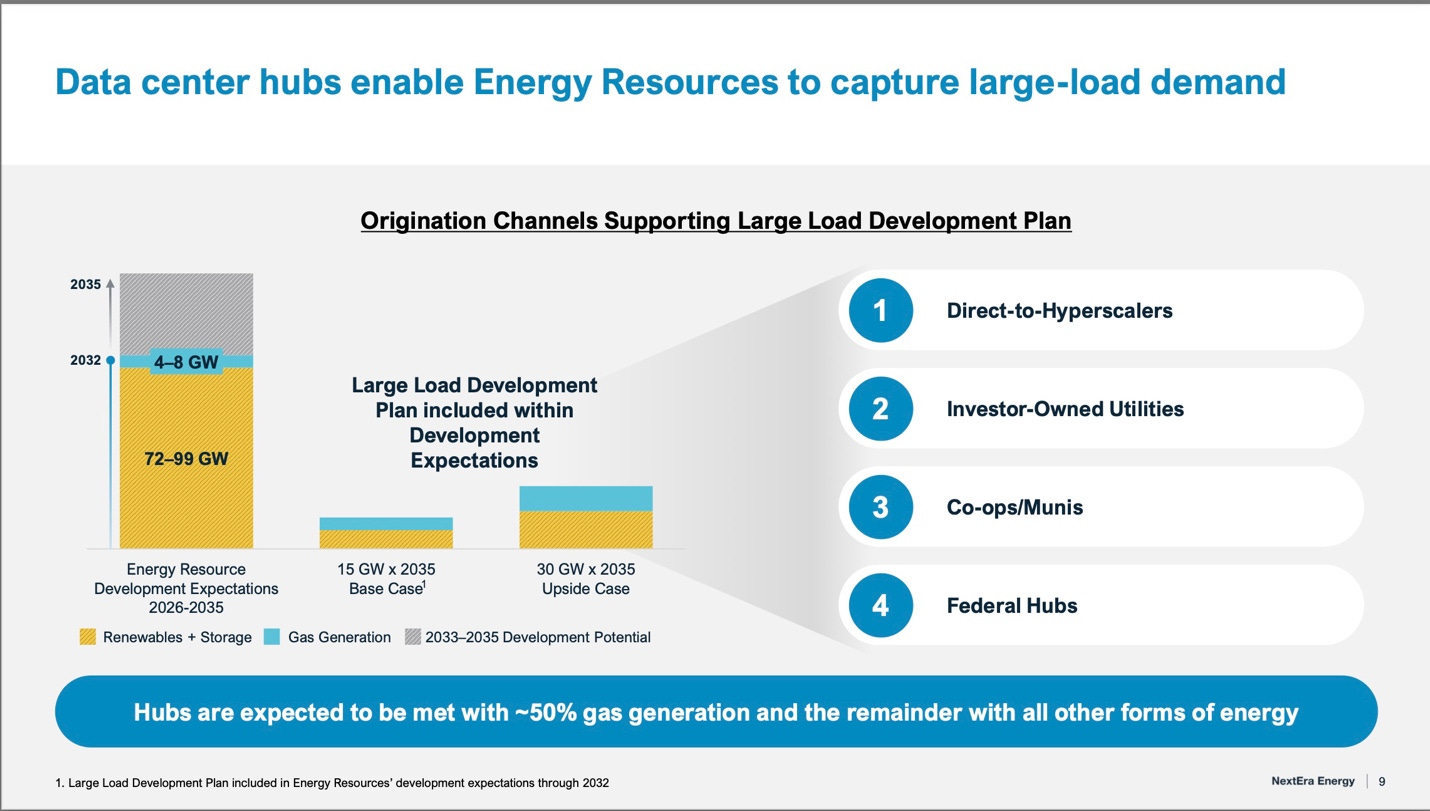
Layering in NextEra’s own data center load pipeline makes the combined opportunity set considerable — though not all of it will be built. What matters is that it represents genuine incremental demand, not a reshuffling of existing load.


S&P’s 2026 power market update reinforces the strategic rationale: the NextEra-Dominion combined footprint maps well onto the regions with the strong forward demand. Near-term solar additions are largely already contracted and under construction; the more interesting variable is the outlook for firm dispatchable capacity.


Firm power commands a premium in this environment. Combined-cycle gas remains the workhorse — both today and through the mid-2030s — aided by the region’s proximity to Marcellus Shale supply. As coal retirements accelerate, gas fills the gap. The generation mix shifts more materially after 2030 (as above).
NextEra’s “Energy Resources” unit projects and reported a standalone and co-located battery storage pipeline of approximately 110 GW. Given NextEra’s entrenched positions in California and Texas — the two largest markets for batteries— that figure is defensible. Additional absorption capacity in Virginia, New York, and other large power markets adds further credibility to the pipeline.
The chart below reflects S&P’s generation outlook — consistent with the combined entity’s positioning. (The gas needs are not fully reflected here but are acknowledged.)
A Big Territory
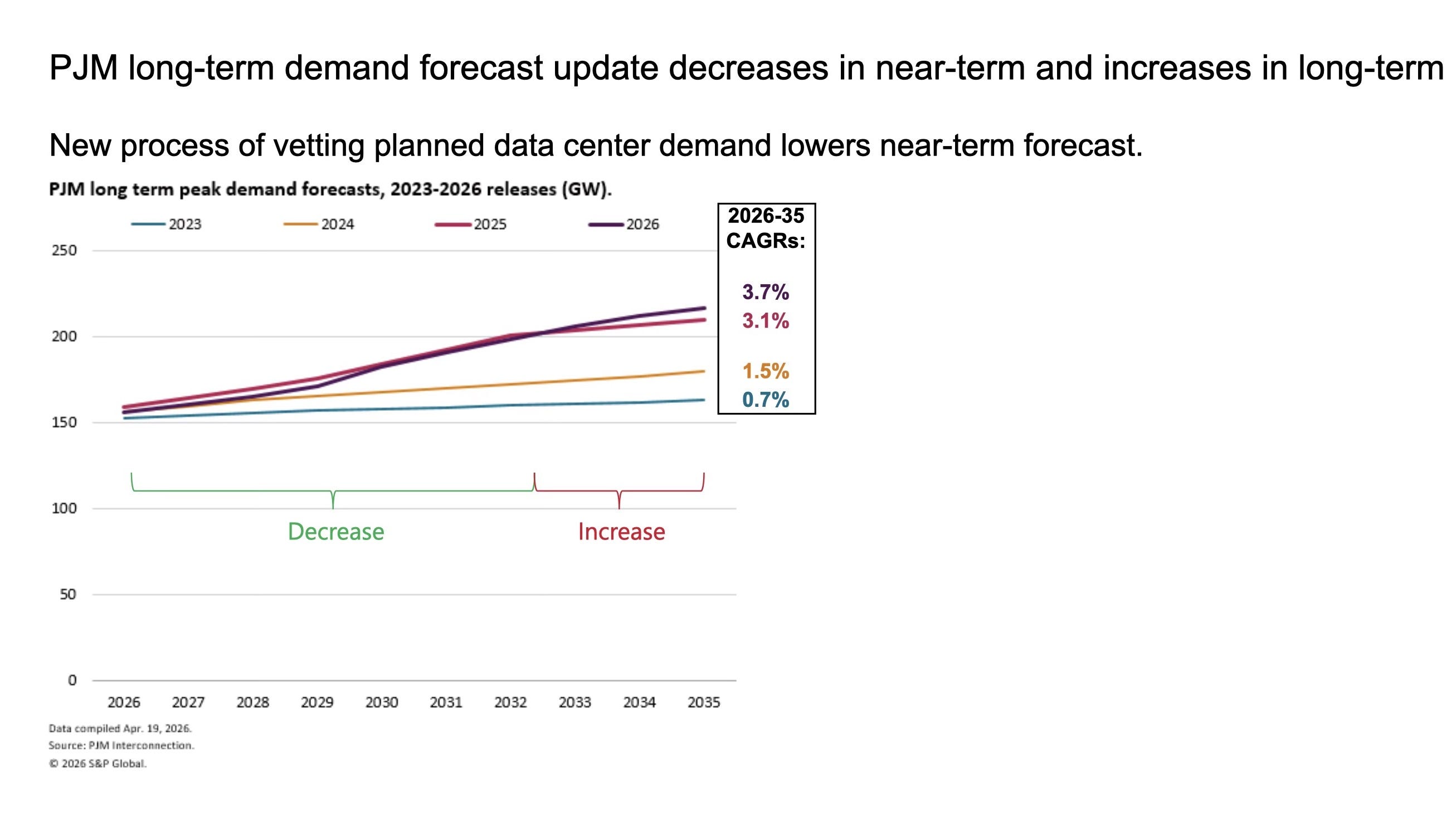
The timing of the merger is well-considered. PJM — the thirteen-state grid operator whose footprint substantially overlaps with the combined entity’s coverage area — recently revised its near-term data center demand forecast downward, pushing load growth further out on the curve. That creates a long runway (see below). Scaling infrastructure across the upper East Coast, mid-continent, and Dominion’s Carolinas service territory is a multi-year exercise, and this deal positions the new NEE to execute for capital efficiency.
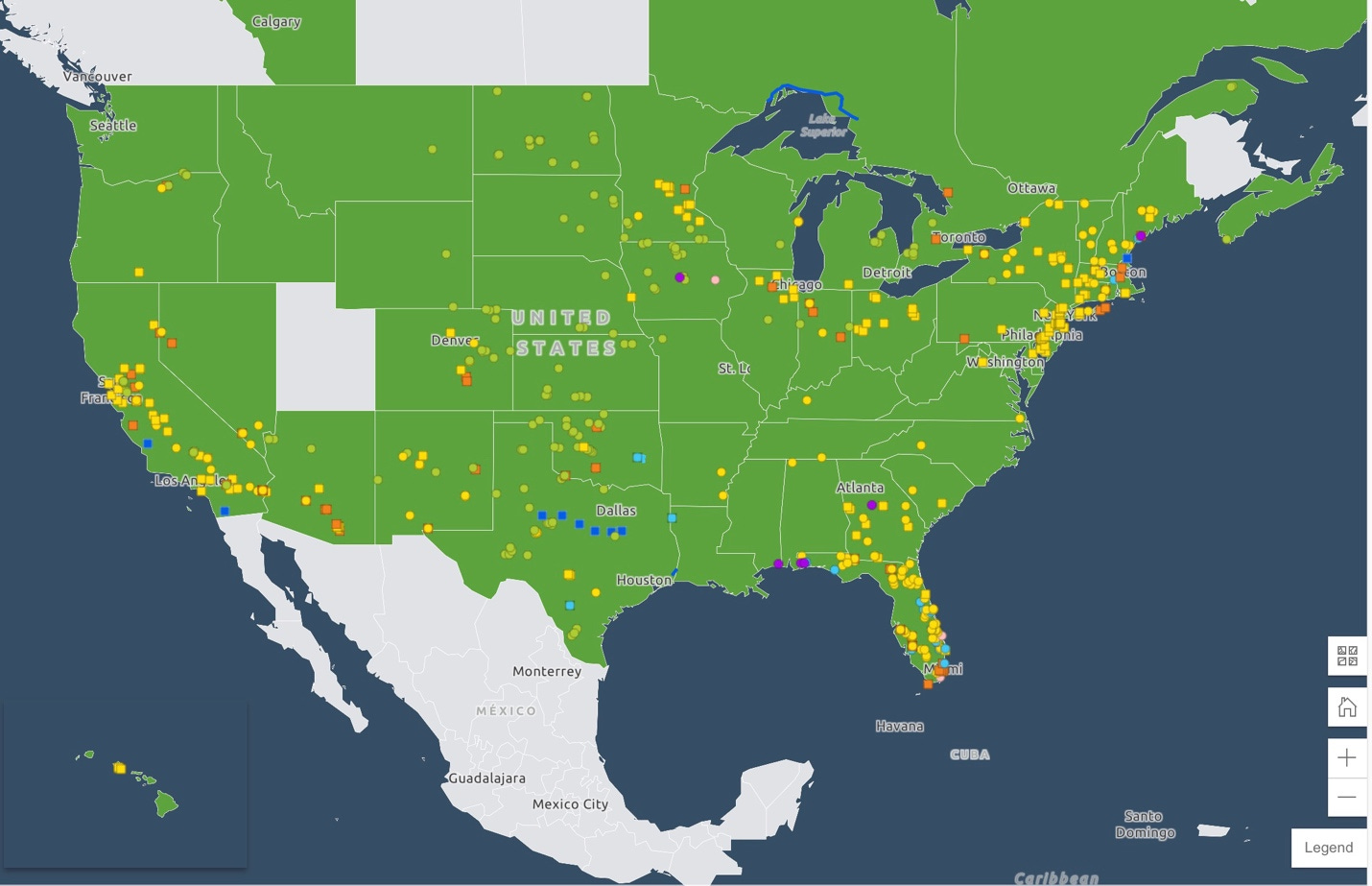
Natural gas is projected to satisfy approximately half of firm power requirements through the forecast period, according to S&P’s assessment of PJM. In addition to the above-mentioned states, add in Ohio, Pennsylvania, and Illinois—all growing data center markets—and the opportunity set is further increased to support the growth.
Past is Prologue?
The closest historical comparison may be Exxon’s acquisition of Pioneer in 2023— a scale and consolidation play driven by a resource trend of acquiring key assets and scaling up resources. The Permian, the largest producing basin the U.S., was the prize in this case. Pioneer’s acreage was simply the best.