

The AI infrastructure buildout is the one of the most debated investment themes of the times. A proxy for it is the data center, which supports existing and growing demand, like cloud and on-prem facilities. We also know that new AI workloads, the IT data centers house, is in a fast and furious adoption phase in a series of unknowns timelines.

The data center isn’t just represented by AI workloads and spending compute churning out data of various qualities. The connection to commercial real estate, industrial and infrastructural-focused real estate, ie., digital infrastructure, is a missing part of the concept. This is driving some of the financings which are widening the capital stack into new places. We are entering a new day of measurement and disclosure too.
Questions of how much compute (it’s a lot) gets built are relevant. The timelines are relevant and likely extending because of the physicality and supply chain constraints connected to the buildout. Two areas of constraint are power, but memory chips were and are also challenged, plus every input that goes into this.
In new academic research from an NBER working paper, they estimate that a 188 GW scenario of a U.S. buildout completed by 2032 would require investment of $9 trillion, amounting to 3.2% of U.S. GDP. The researchers do a great job looking at the financing aspects of this buildout. I believe this 188 GW scenario is less.
Based on their $41 billion per gigawatt estimate of a new build, a 200 MW facility costs $8.9 billion, more if it is liquid-cooled versus air-cooled. The dynamics of the details matter if you are investing in specific stocks or the AI trade-specific or focused funds, like Spear Alpha (SPRX). The revenue flows are emerging across the landscape. This is a forward-looking snapshot.
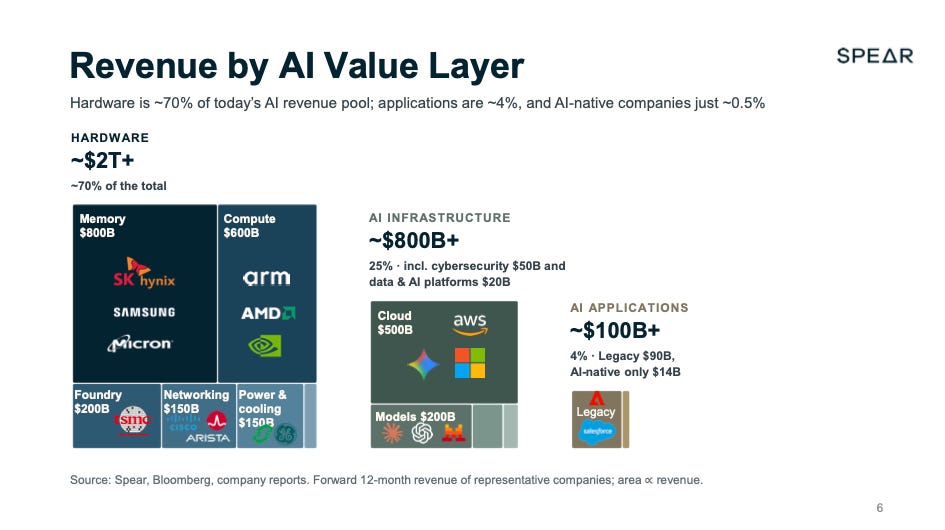
The hyperscalers are still largely in the driver’s seat with the buildout however.
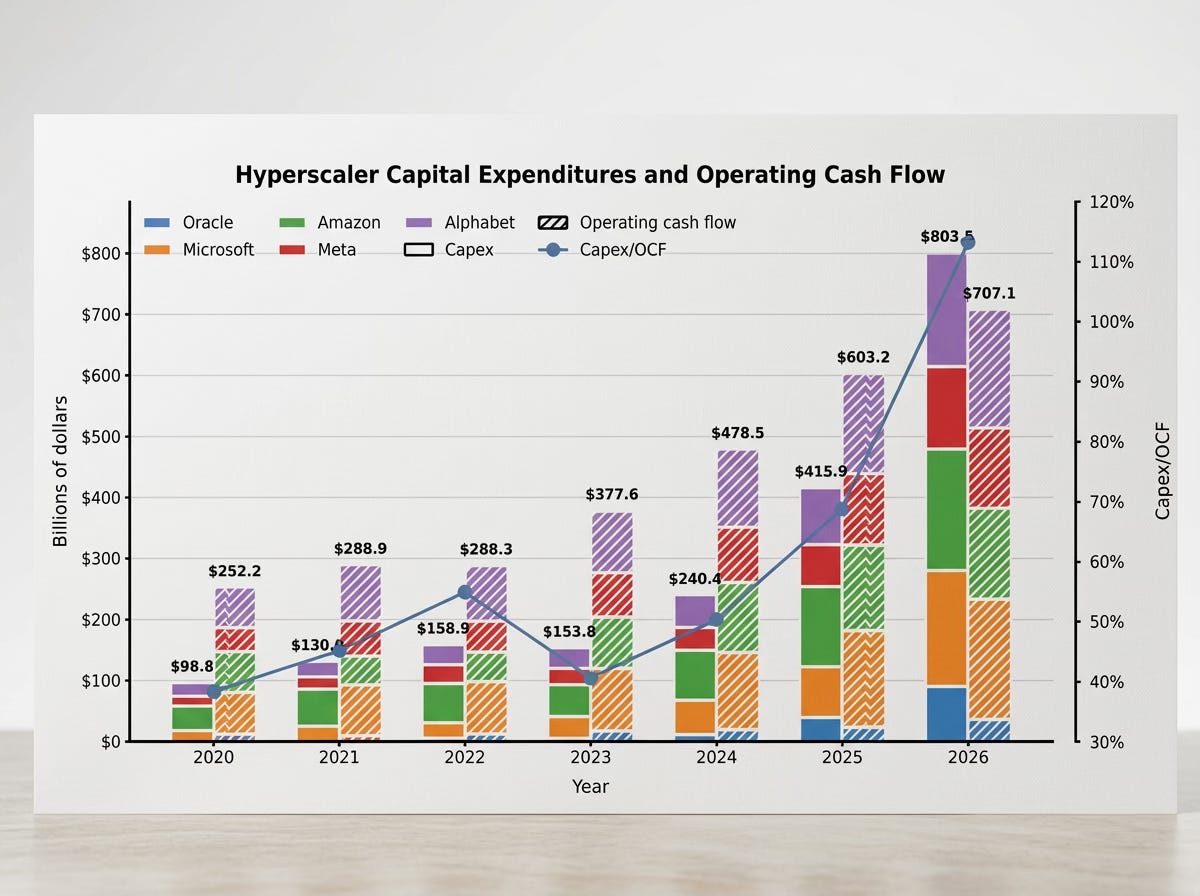
The Blackstone digital infrastructure fund (BXDC) has the right idea in the recycling of capital for recently-built hyperscaler data centers. Meta, Google, Microsoft and Amazon are all implying this. Their off-balance sheet financing isn’t a bogeyman, but a notable forking of the IT side and hard assets side of this physical build-out. Investors have choices and different risk styles. These are two mammoth areas as investment needs suggest. Morgan Stanley forecasts “that more than half of the roughly $2.9 trillion required to meet hyperscalers’ incremental compute needs over 2025–2028 will come from outside capital.”[I] Evidence also suggests that credit investors are repricing the off-balance-sheet financings.
Meta has made choices, reflected by the Hyperion-Blue Owl deal, that indicates seeking to retain more of its asset-light corporate model, not just lower cost financing. It was initially a 2 GW asset with a $30 billion value. This idea was captured in the video article discussing the Blackstone fund as relayed by a former Digital Realty executive that was part of a consortium of financiers for Stargate Abilene in Texas, which included Blue Owl.

The academic research notes that the publicly-traded data center REITs are close to market betas now of 1 versus 0.5. That really should not be the case for Digital Realty, Equinix, and the Blackstone REIT. They are not as exposed to the risk of the entire AI trade, as reflected by their asset bases. It shows you how momentum really lacks nuance, and sometimes knowledge.
The gigawatt (GW) count
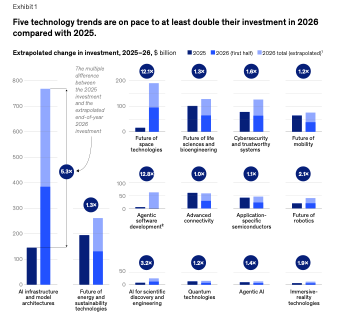
While the lion’s share of capex is devoted to the AI infrastructure build out and advancing frontier models, agentic software development is increasing in investor interest. Interest in energy and sustainable technologies are close behind. We will need more efficiencies in those areas as more dense AI workloads require resources, work in which I’m more connected with.
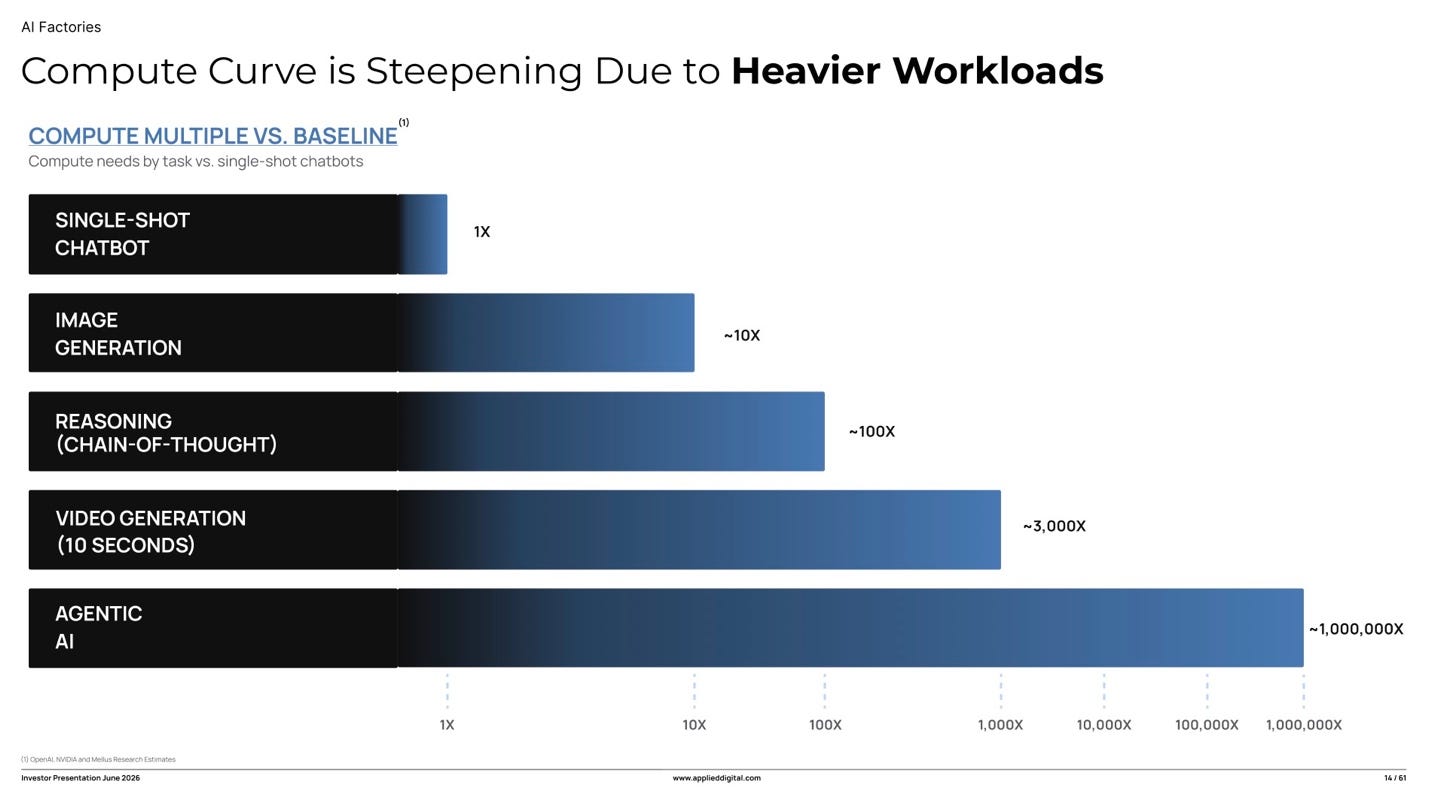
Workloads are expected to increase in the future and require the configuration of chips being developed to evolve differently.
At earnings time ahead, for Amazon, Microsoft, Meta, Google and Oracle, even Taiwan Semiconductor, I would expect to see modest growth indications of new spend. Just the inflationary effects alone could level things out. The optics of the election may cause some conservatism even.
Here’s why. Scenarios are just that, but for the sake of thought experiment:
From the many operational and announced (planned) data centers according to the NBER paper, I dropped out 2031 years and after as the numbers become less likely.
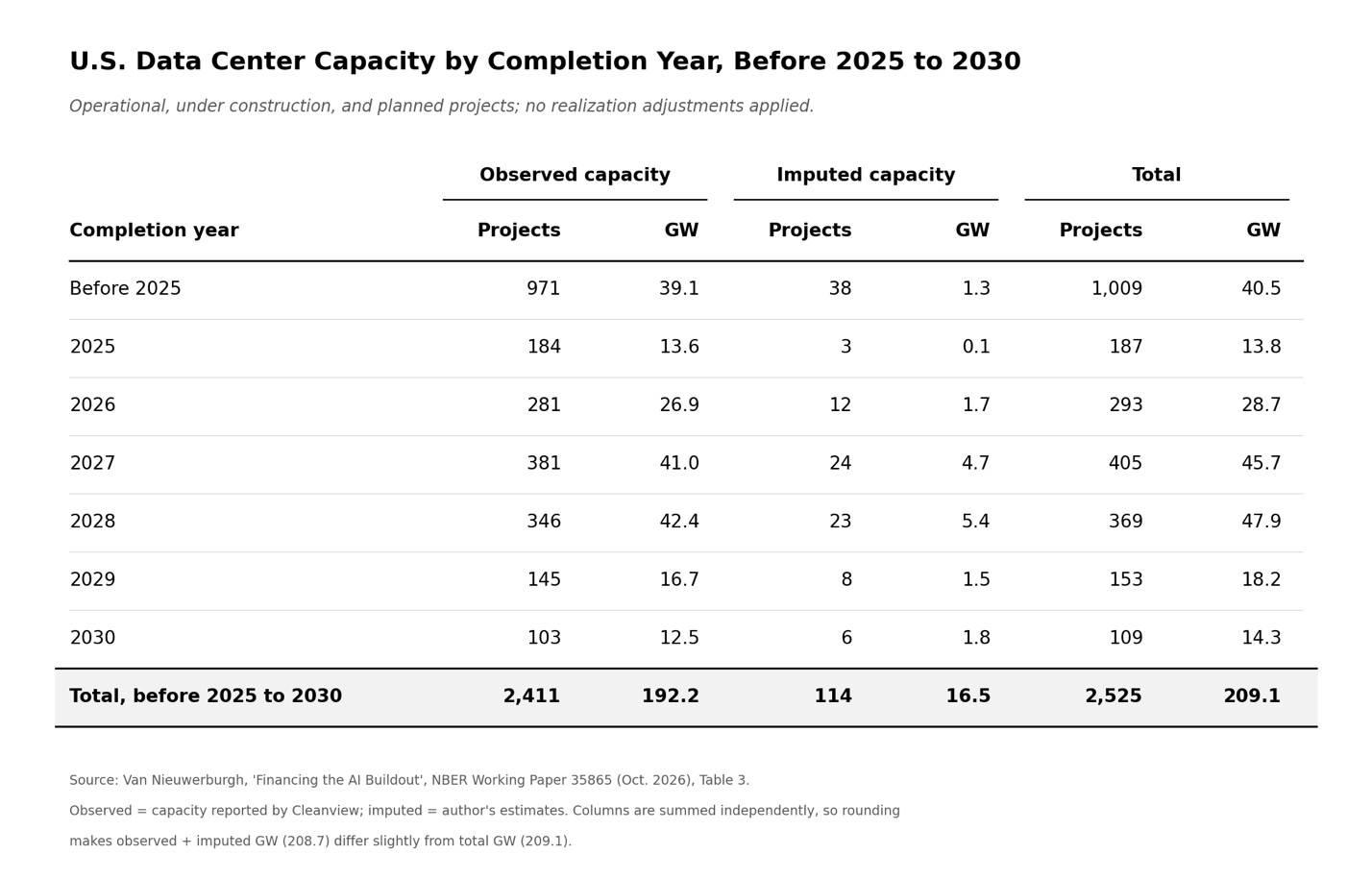
Then, what is more likely, but still likely exaggerated, are planned projects but with realized capacity as the metric. This accounts for delays, reduced sizes, and abandonments, ie., reality of constraints. (See my video analysis.) This leaves the following scenario, which is still on the higher side of the buildout’s real numbers.